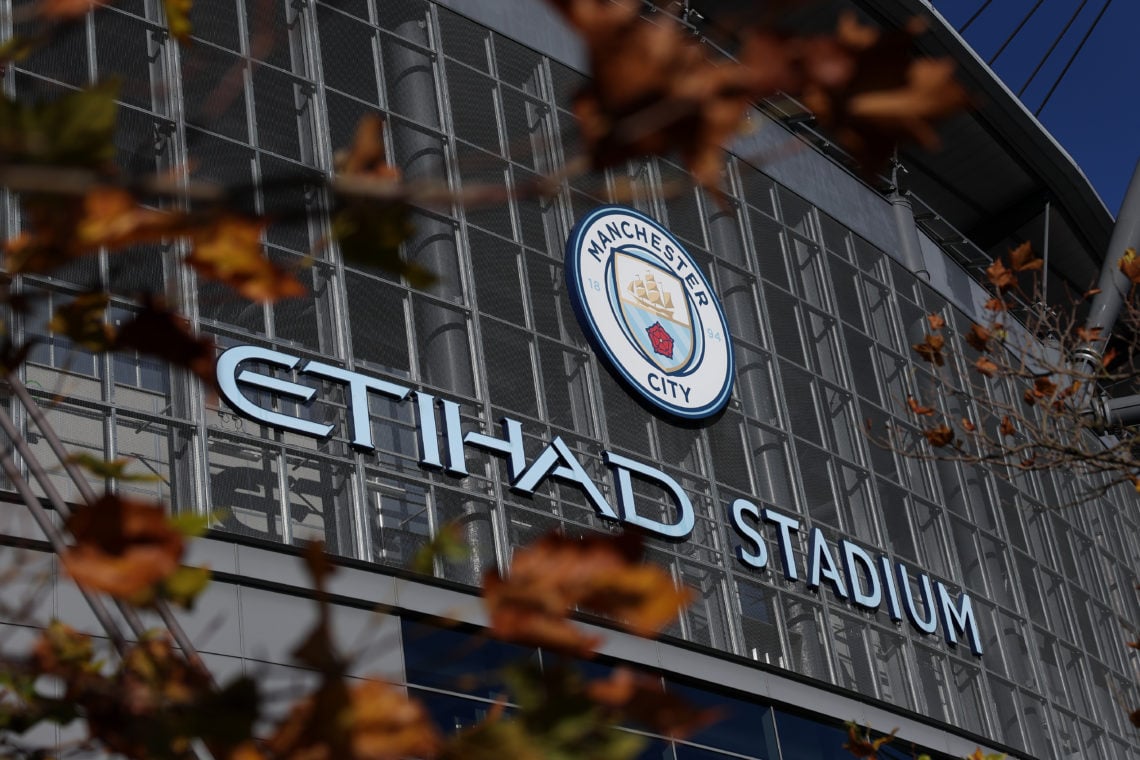


Manchester City appear to have hit a blow against the Premier League following their ‘victory’ over the APT case.
The Premier League and Manchester City are currently embroiled in a legal battle on several different fronts, with the hearing for the club’s 115 charges for financial rules breaches now underway.
A verdict on the hearing is not expected until early 2025 but City have seemingly struck first after they claimed a victory in the APT ruling this week.
But have City really won? What exactly are APTs and what do they do? How will they change following the ruling and how could it impact the rest of the Premier League like title rivals Arsenal?
To answer all those questions and ensure you know exactly what’s going on, MCN have spoken to GRV’s Head of Football Finance and Governance Content, Adam Williams.
- Man City 115 charges explained: Date of hearing, possible punishments and what Pep Guardiola has said
Have City really ‘won’?
We should start by saying that there a lot of moving parts and a lot of interpretations about what this outcome means for the Premier League.
I should also say that my domain is finance and governance rather than law, so I will defer to experts who have far more knowledge about this than I do.
We also have to be cautious about saying Man City have ‘won’ the case.
In the arbitration courts, it is very rarely as definitive as one side winning and the other losing.
It isn’t great for a headline or an easy narrative, but the reality is that it is generally far more nuanced than that – and both sides have claimed victory here.
That is the case here and it will probably be the case when we eventually learn the outcome of the 115 charges hearing.
What are APT rules?
But with that said, there is no getting past the fact that this is hugely embarrassing for the Premier League.
After the Leicester case, it is the second time this year that their regulations have been proven inadequate.
So what are the associated party transaction (APT) rules that will now have to be at least partially rewritten after this case between City and the Premier League?
Introduced in the aftermath of the Newcastle takeover, the aim of the APT rules was ostensibly to ensure that clubs were not able to artificially inflate their finances and thereby their PSR position by signing overpriced commercial deals with companies with whom their owners had a link.
Man City’s deal with Etihad, for example, was an associated party transaction because of the Abu Dhabi link, so it had to be appraised for fair market value and City had to prove that it met the threshold.
What will change after the ruling?
It’s important to note that I can’t see any reason that the fair market value facet of the APT rules will be removed. Rather, it looks as though the burden of proof will now be with the Premier League to appraise deals for fair market value, as opposed to the clubs having to do that.
Secondly, City have successfully argued that soft loans – which are interest-free loans from an owner to their club – should be included in the scope of the APT rules, as they are effectively a form of subsidy which is akin to sponsorship funding from an owner.
Basically, the upshot here seems to be that clubs with soft loans will – for the purposes of PSR – have to factor in a commercial interest rate on these loans.
The impact on Arsenal and the rest of the Premier League
Some have suggested that this could be bad news for the likes of Arsenal, who have over £200m in soft loans from Stan Kroenke.
I personally don’t see it that way, as he could just capitalise the loans, i.e. convert them into equity.
Make no mistake, this is mortifying for the Premier League. But I don’t think this is quite the seismic ruling that it is being made out to be in some quarters – at least not in terms of the Premier League’s financial ecosystem.
Yes, it may give some clubs a little more flexibility to push the envelope when it comes to commercial income, but I doubt it will be anything that will be too transformative as the fair market value principle is still in place.
And yes, some clubs might have to factor in a few extra million to their PSR calculation in terms of the interest rates on soft loans, but again I don’t think this is going to tip the scales too much.
This is a massive PR victory for City and they may well be able to claim substantial damages from the Premier League as a result. For them, it is a landmark event. But for the rest of the division? I think the potential impact has been overblown.
City challenge Premier League’s response
The Premier League have said that the vast majority of the APT system has been retained, with the tribunal rejecting most of City’s claims.
City’s response to this – which they have outlined in an email to all 19 other Premier League clubs – is that only aspect of the APT rules needs to be deemed unlawful for the system as a whole to be thrown out.
They have also said that they don’t want the Premier League to rush through making changes to the APT rules, as they have accused them of doing originally after the Newcastle takeover.
I’ve seen some suggestions that there could be a window of opportunity for City to push through the massive Eithad deal they had blocked by the Premier League during this interim period, in which they argue the rules are essentially moot.
If they do that, the Premier League is going to find itself playing legal whack-a-mole. Every case is going to spawn another one.
I think this is emblematic of what is wrong with the Premier League’s constitution at present. And it will only embolden those calling for the independent regulator for English football, which is making its way through Parliament, to be beefed up.
New amends vote on November 22
For City, I think this is as much about putting strain on the Premier League as it is about the outcome of the APT case itself.
The Premier League doesn’t have unlimited resources and, with about £45m spent on legal fees last year alone, is feeling the pressure from shareholders.
My reading of the outcome itself is that is a victory for City but a relatively small one in terms of the potential commercial value of the rule changes.
The caveat to that would be if Man City could seek compensation for lost commercial income, as has been suggested in some reports. That could be significant, if it is indeed an option.
Having access to the databank of commercial deals might give them a bit more leverage in pushing for commercial deals with greater value than has previously been allowed under the fair market value aspect of the rules.
The change in terminology, from ‘would’ to ‘could’, might also help them nudge up their commercial income.
That means the Premier League has to consider the fact that Gulf state-associated companies ‘could’ pay a premium and that should therefore be accounted for in the fair market value assessment.
The soft loans aspect doesn’t affect them directly, but the fact that the Premier League is revising that aspect of the rules is a tacit admission that the rules have been poorly drafted and haven’t considered other kinds of subsidies.
So I think this could potentially give City scope to squeeze an extra few million per season from commercial income, but I don’t think it is going to be a cure-all in terms of PSR constraints.
In any case, City have more PSR headroom than almost every other Premier League club – the battle with Richard Masters and co has become about far more than that.